
Ask 10 shop owners in Ahmedabad whether they need a website and 9 will say yes. Ask them where to begin and you’ll get a lot of blank looks. Fair enough. Website development sounds technical, and everyone you talk to seems to have a different opinion on what it should cost and how long it should take.
Here’s the good news: you don’t need to know code. You need a clear plan. This checklist is that plan, written in plain words, the way you’d explain it to a friend who runs a small business and has no time for jargon.
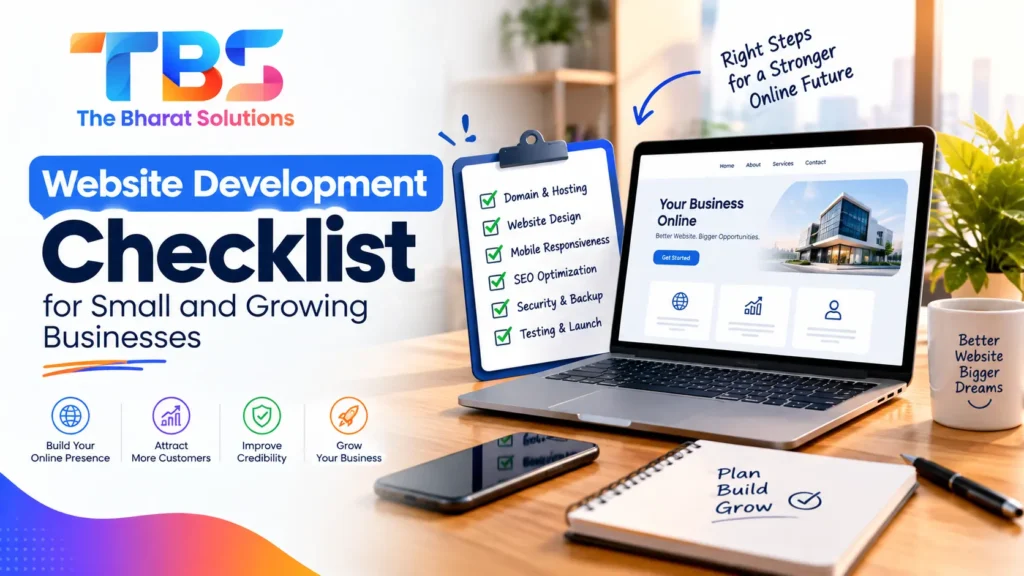
Why Small Businesses Need a Professional Website
Picture a customer outside her office near CG Road at lunchtime, wondering where to get a printing job done. She doesn’t ask a neighbour. She takes out her phone. Within a minute she has looked at two or three businesses, and the one that looks credible gets the call.
That’s the whole argument, really. A good website does a few things for you:
- It builds trust before anyone speaks to you. A clean site says you’re a real, reliable business.
- It works while you sleep. An enquiry at 11 PM on a Sunday still reaches you.
- It supports lead generation. People can ask for a quote without waiting for your shop to open.
- It belongs to you. Social media rules change overnight. Your own site doesn’t.
None of this is reserved for big brands anymore. A strong online presence is simply how local customers check you out these days. That’s why professional website development has become one of the more sensible spends for a growing business. And business website development keeps paying back for years, unlike a newspaper ad that’s forgotten by tomorrow.
Website Development Checklist Before You Start
Most website problems begin before a single page is designed. Spend an hour on these four steps and you’ll save yourself weeks later.
Define Your Website Goals
Start with one honest question: what should this site do for my business?
Get calls? WhatsApp messages? Online orders? Appointments? Pick one main job and maybe one backup. A site that tries to do five things usually does none of them well.
Understand Your Target Audience
A student hunting for a coaching class and a factory owner looking for a supplier don’t browse the same way. Jot down who your typical customer is, what they keep asking you, and whether they’re on a phone or a laptop.
If most of your customers come from Ahmedabad and nearby towns like Gandhinagar, say so on the site. Use the words they actually use.
Choose a Domain and Hosting
Your domain is your address online. Keep it short, easy to spell and easy to say over a phone call. Skip numbers and hyphens. A .com or .in works well for most Indian businesses.
Hosting is the land your site is built on. Bargain hosting often means downtime and slow pages, and you pay for that later. Look for good uptime, regular backups and support that actually replies.
Plan Website Structure and Navigation
Grab a pen and sketch your pages on paper first. Most small business sites need just Home, About, Services (or Products) and Contact. A blog, gallery or testimonials page can come later.
Keep website navigation simple enough that a visitor finds what they need in two or three clicks. “Services” beats “What We Do For You” every time. Good menus also help the overall user experience.
Essential Website Features for Small Businesses
Once the plan is set, check that your site has these basics. Good website design isn’t about animations and effects. It’s about making life easy for the visitor. If you’d rather not do it alone, website design services in Ahmedabad can take care of the visuals while you focus on the business.
Mobile-Responsive Design
Most people in India browse on their phones, so this one is non-negotiable. A responsive website adjusts itself to any screen, whether that’s a phone, tablet or desktop.
Open your own site on a real phone. Can you tap the buttons easily? Is the text readable without pinching? Build a mobile-friendly website first and let the desktop version follow.
Fast Loading Speed
Nobody waits around for a slow page. Website speed affects both visitors and search rankings.
Big photos are the usual culprit. Compress images before uploading, skip heavy sliders, and don’t pile on plugins you don’t need.
Clear and Useful Content
Write like you’d talk to a customer across the counter. Say what you offer, who it’s for, where you work and why someone should pick you. Avoid jargon. And don’t copy text from competitors. Search engines notice, and so do customers.
Essential Business Information
Put the basics where people can find them without hunting:
- Business name, address and a Google Maps link
- Phone number and email
- Working hours
- Areas you serve
- GST or registration details, if they apply
Clear Calls-to-Action
Every page should tell people what to do next. A good call-to-action is short and direct: “Get a Free Quote,” “Call Now,” “Book a Visit.” Put one near the top and another at the end.
Contact and Enquiry Forms
A simple contact form quietly turns visitors into leads. Ask for a name, a phone number and a short message, nothing more. Every extra field loses you a few people.
Add a click-to-call button and a WhatsApp link too. Plenty of Indian customers would rather message than fill in a form.
Website Security
Website security isn’t just for banks. An SSL certificate encrypts the data moving between your site and its visitors, and it puts the little padlock in the browser. Without one, browsers show a warning and most people leave.
Keep your software updated, use strong passwords and take regular backups.
SEO-Friendly Structure
An SEO-friendly website has a clean page structure, descriptive headings and fast, mobile-ready pages, so search engines can easily understand what you do.
SEO Checklist for a New Business Website
You don’t need to be an expert in search engine optimization to get the basics right. Start here:
- Give every page its own title and meta description.
- Use one H1 per page, with H2 and H3 headings below it.
- Mention your service and city naturally, like “interior designer in Ahmedabad.”
- Add short, descriptive alt text to images.
- Set up a Google Business Profile and keep your details the same everywhere.
- Submit your sitemap to Google Search Console.
- Link related pages to each other.
Follow these and your SEO-friendly website will be easier for local customers to find. Write for people first. Good search engine optimization is mostly patience and consistency, not tricks.
A Practical Example: A Home-Décor Retailer in Ahmedabad
Let’s make this real. Imagine a family-run home-décor shop in Maninagar. (This one is made up, but the situation is very common.) Most of their customers come from walk-ins and word of mouth, and they’d like more enquiries, especially in the weeks before Diwali.
Here’s how they could work through the checklist:
- Goal: more showroom visits and WhatsApp enquiries.
- Audience: families and young couples furnishing a new home in Ahmedabad.
- Pages: Home, Collections, About, Gallery, Contact.
- Content: real photos of their products, rough price ranges, and a note on which areas they deliver to.
- Buttons: “Visit Our Showroom” with a map link, and “Chat on WhatsApp.”
- Local search: a Google Business Profile and a page that names the areas they serve.
Nothing fancy there. The point is that one clear goal shaped every decision, and a focused site almost always beats a crowded one.
Common Website Development Mistakes to Avoid
Small businesses tend to trip over the same few things:
- Building without a goal. If you can’t say what the site is for, neither can your visitors.
- Forgetting the phone. Open every page on a mobile before you approve it.
- Ignoring speed. Slow pages wreck the user experience, and people simply leave.
- Burying the next step. If visitors don’t know what to click, most won’t click anything.
- Copying content from competitors. Write your own answers to your own customers’ questions.
- Skipping security. Get SSL installed and keep everything updated.
- Over-complicated menus. Five or six main items is plenty for website navigation.
Two mistakes deserve a little more space.
Treating the site as finished. Business website development doesn’t end at launch. Plugins need updates and content goes stale. Budget for regular website maintenance, because an outdated site makes a business look inactive.
Choosing on price alone. The lowest quote often costs more once the fixes start. A ready-made template also can’t replace custom website development when your needs are specific. Compare web development services by what’s actually included, not by the number at the bottom.
Final Website Launch Checklist
Before you go live, set aside an hour and run through this list. It can save you from a very awkward first week.
- Submit every contact form yourself and make sure the enquiry actually reaches your inbox.
- Click every link and button. Each call-to-action should lead somewhere useful.
- Look at the site on a phone, a tablet and at least two browsers. A responsive website should hold up on all of them.
- Run Google PageSpeed Insights and see how your website speed looks on mobile.
- Proofread everything, especially phone numbers and addresses. A typo in your contact details costs real enquiries.
- Check for the padlock on every page, which confirms SSL is working.
- Install Google Analytics and Search Console, so you can see where visitors come from and what they do once they arrive.
- Put website maintenance in your calendar: updates, backups, security checks and the occasional content refresh. A site is never really “finished.”
Why Choose The Bharat Solutions for Website Development?
A checklist only gets you so far. Somebody still has to build the thing, and that choice matters as much as any step above.
The Bharat Solutions is a website development and digital solutions provider that works with small and growing businesses to build a strong online presence. The approach is simple: talk first, design later. Professional website development should begin with a proper conversation about your goals, your customers and your budget, not with a template picked off a shelf. Where a template won’t do, custom website development lets the site fit the way your business actually works.
So what should you expect from any website development company? A site that loads quickly, works well on a phone and is secure from day one. Website development services with realistic timelines, and someone who answers your messages. And support after launch, because something always comes up in the first month.
If you’re comparing a website development company in Ahmedabad with agencies elsewhere in India, ask to see past work, and ask who you’ll be speaking to once the site is live. The answers tell you a lot.
For website development services in Ahmedabad, The Bharat Solutions offers web development services for business sites, service websites and online stores, along with website design services in Ahmedabad for businesses that want a fresh look without losing usability.
Frequently Asked Questions
1. How long does it take to build a website for a small business?
A simple website usually takes two to four weeks. Much of that depends on how quickly you send content and give feedback. Bigger sites with custom features or online payments take longer.
2. How much does a website cost in India?
It varies a lot with features, design and technology. A basic informational site costs far less than a custom online store. Ask for a written quote that lists what’s included, and compare web development services line by line, since a low quote may leave out hosting or support. Reliable website development services in Ahmedabad usually itemise hosting, domain and support separately.
3. Do I need a website if I already have social media pages?
Yes. Social media helps people find you, but a website gives you full control, builds credibility and works better for lead generation. You don’t have to choose one or the other, but your website should be the home base.
4. What is the difference between design and development?
Design is how the site looks: layout, colours and fonts. Website development is how it works: the code, speed, forms, security and features behind the scenes. A good project needs both.
5. How do I choose the best website development company in Ahmedabad?
Look at their portfolio and client feedback, and notice how they communicate. Do they explain things in simple language? Do they offer support after launch? Do they understand local business needs? Those answers tell you more than a price list.